



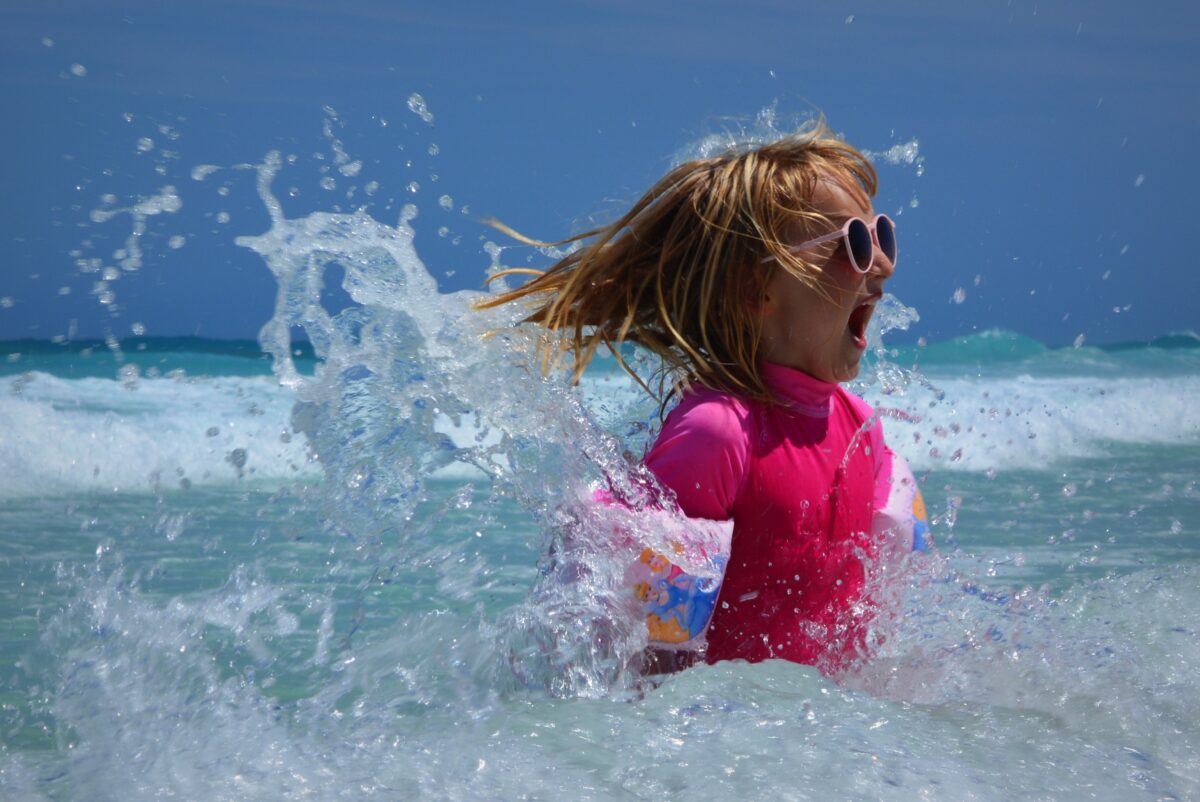
Summer is the time for kids. Swimsuits that never have time to dry, ice cream before lunch, late nights and adults who finally have time. But for many children, there is also another side to summer: adults who change when alcohol is brought in the picture.
It often starts out nicely. Someone sets out shrimp, someone opens the patio door, someone says, “Now it’s a real vacation.” The children run between the kitchen and the lawn. One adult laughs a little louder than usual. Another looks tired. What may feel like relaxation to the adults can be something completely different to the child.
Children are experts in mood. They notice when voices change. They see when someone becomes unsteady, absent, or irritable. They hear jokes that no longer sound like jokes. And they often feel responsible long before any adult realizes they are doing so.
A recurring survey from the Childhood Without a Hangover initiative shows that more than one in four adults, 28 percent, report that someone close to them repeatedly drank too much alcohol during their childhood. In most cases, it was a guardian. The same survey also shows that eight out of ten think that adults should not get drunk when children are around.
This doesn’t mean that every glass of wine on vacation is a problem. But it does mean that children’s perspectives need to be given more space in the conversation about summer, vacation, and alcohol.
When “vacation” means different things
For adults, a vacation can be a long-awaited recovery. For children, it can be security, closeness and community. But if alcohol becomes what sets the tone, the child can begin to adapt.
Maybe the child will be extra quiet at dinner. Maybe it keeps track of how many bottles are on the table. Maybe it asks: “Are you going to drink today too?” without really knowing why the question feels important.
The Public Health Agency describes that the risk of injury and illness increases the more you drink, and that how much you drink at one and the same time is also important. A standard glass of alcohol corresponds to 12 grams of pure alcohol, for example 33 cl of strong beer, a small glass of wine or 4 cl of spirits.
But when children are involved, the question is not just how much is drunk. The question is also: What happens to me as an adult when I drink? And how is it experienced by the child?
Children don’t need perfect adults – but safe adults
A summer without alcohol is a matter of course for some. For others, it is about reducing, planning or choosing certain occasions. The important thing is to dare to look at the situation with the child’s eyes.
Children need adults who can be trusted. Adults who can drive if something happens. Adults who can bear the night, comfort, listen and set boundaries. Adults who are still themselves when the evening gets late.
It can be helpful to ask a few simple questions before the holiday:
What role do I want alcohol to play in our summer?
Are there times when I want to be completely alcohol-free?
How do I want my children to remember me during the leave?
Is there anyone in the family who gets worried by my or someone else’s drinking?
Sometimes talking about it is enough. Sometimes support is needed. And sometimes small changes can make a big difference: non-alcoholic drinks on the table, every other non-alcoholic drink, clear agreements between adults, or allowing certain days to be completely alcohol-free.
The best thing children can have is adults that are present
Many who grew up with alcohol problems in the family do not just describe the big events. They also remember the diffuse: the waiting, the anxiety, the atmosphere, the feeling of not knowing which version of the adult would emerge.
Therefore, one of the most important choices of the summer is perhaps not which place to go to, which food to grill or how nice the weather will be. It could be deciding what kind of adult you want to be when the children are around.
For children, summer is not measured in hours of sunshine. It is measured in security, laughter and adults who are available – for real.
In the next part, we take a closer look at how holiday habits can creep in, and how small decisions can help both adults and children have a safer summer.
LINKS (Swedish):
Svenskberoendemedicin.se
Systembolaget
Accentmagasin.se
Anhoriga.se