



Digitalization in addiction care is not just about moving a physical meeting to a screen. It is also about creating new opportunities for continuity, participation and individualization.
When digital tools are used as a complement to regular treatment, they can help make care more accessible and more present in the client’s everyday life.
Can digital follow-up increase compliance?
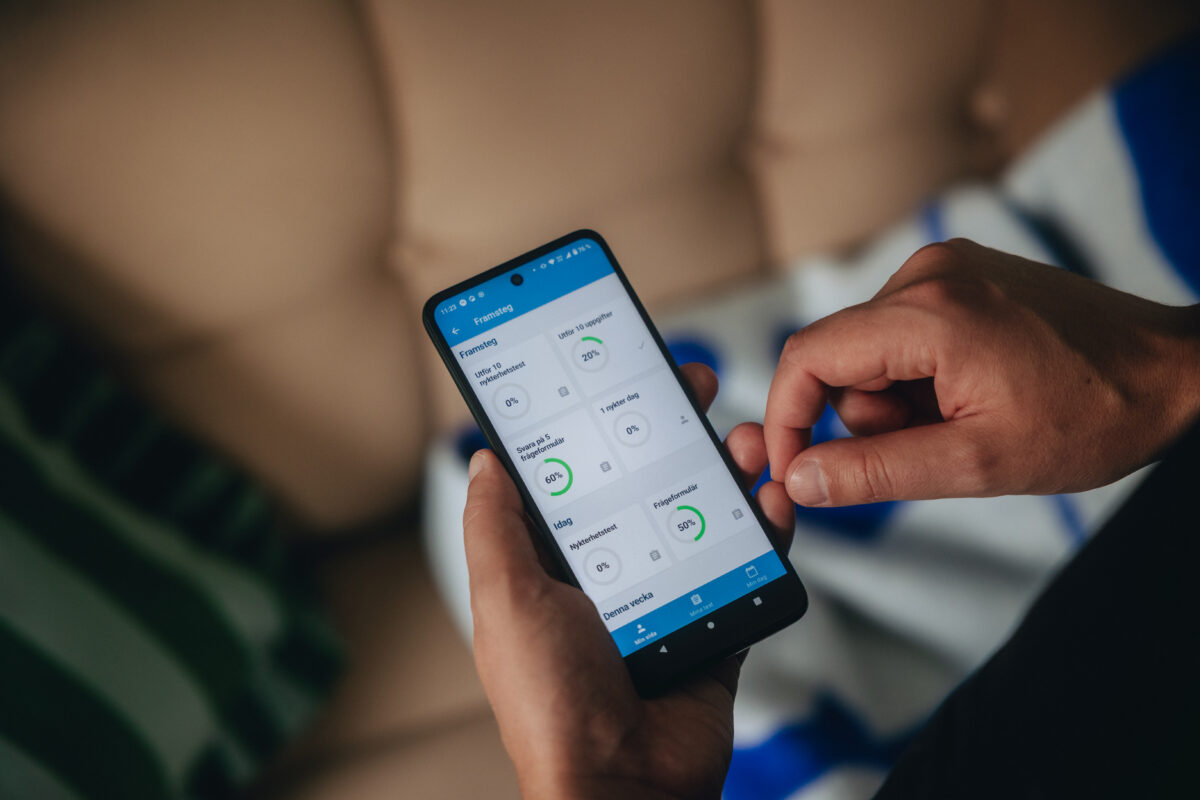
It can be difficult to stick to a treatment plan when motivation fluctuates or daily life is unstable. Clear reminders, regular follow-up and visible progress can help the client maintain structure.
For example, digital follow-up can make it easier to:
- remember planned tests and activities
- follow one’s own development
- understand the connection between everyday life, well-being and substance use
- get feedback on completed tasks
- stay in touch with the treatment even between visits
When the client sees their own progress, it can also strengthen their sense of participation and responsibility in the treatment.
Can digital support reduce missed appointments?
Missed appointments can be due to many different things, such as forgetfulness, anxiety, low motivation, practical obstacles or poor health.
Digital reminders and ongoing contact can make it easier for the client to stick to planned interventions. If the client starts missing activities or no longer responds to follow-up, the therapist can also get an earlier signal that something has changed.
Digital monitoring can therefore help to identify the risk of disruption earlier. However, the actual effect depends on how the working method is designed and how actively the information is followed up by the operator.
Can technology strengthen the relationship between client and therapist?
Digital care can sometimes be perceived as less personal. But used correctly, technology can instead create more natural touchpoints and make the therapist more present between sessions.
A short message after a difficult day, feedback on a completed test or a question about motivation can show the client that someone is following the process and reacting when support is needed.
The relationship is not strengthened by the technology itself, but by how it is used. Digital tools therefore need to be combined with clear routines, relevant feedback and a person-centered approach.
Digital should support the relationship – not replace it
The greatest benefit arises when digital follow-up becomes an integrated part of treatment. It should not create more administration or be perceived as surveillance, but rather contribute structure, continuity and a better basis for the right intervention at the right time.
For the operation, this means that you need to think about:
- what information is relevant to follow
- how often follow-up should take place
- who is responsible for responding to signals
- how the client is informed about the purpose
- how the digital support is linked to the treatment plan
When the working method is clear, digital follow-up can help the caregiver understand more of the client’s everyday life – and help the client feel less alone in the change process.
Would you like to know more about Previct Care and how digital support can both help you in your work and at the same time support your client in an easier way? Contact us: info@kontigocare.com