



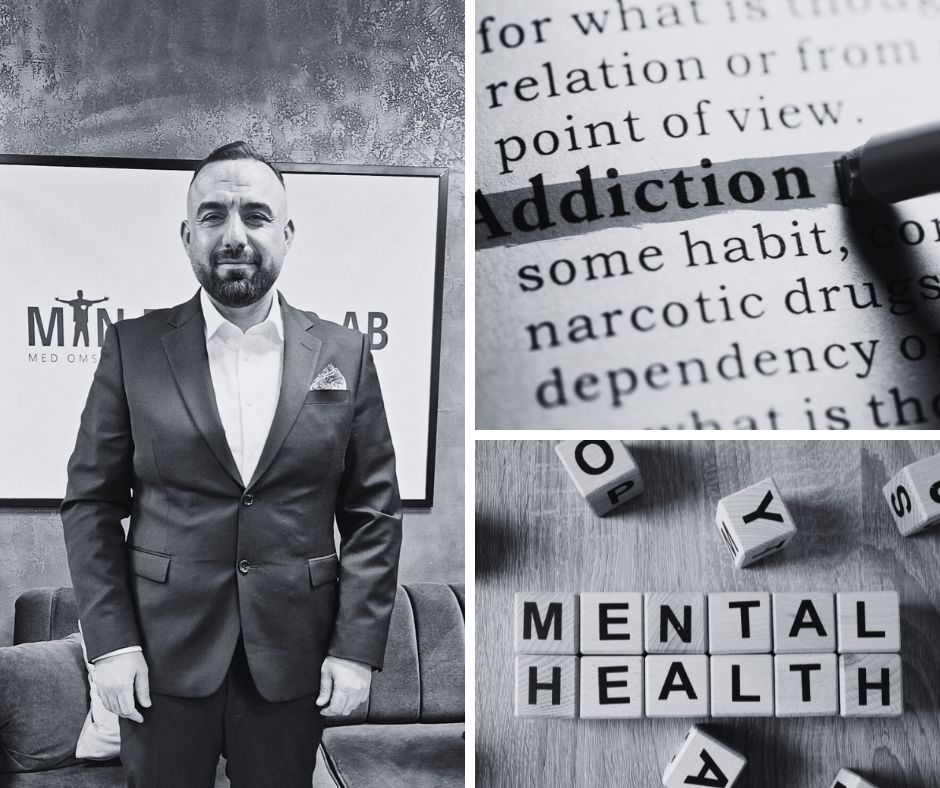
“Fifteen years ago, it was common for therapists to encounter people with a pure alcohol addiction. Today, the reality is different. Mixed addictions have become increasingly common, especially among younger adults. Alcohol is often combined with, for example, Tramadol, cocaine, cannabis (THC) or Benzodiazepines.”
Shoresh Palanijafi works as a therapist with clients aged 18–35, he clearly sees how the addiction problem has changed over time. In his daily work, it is common for several substances to occur in parallel – and often in combination with mental illness. Shoresh has extensive experience in addiction care and he runs the company Min Framtid AB, which offers secure placements for people with a threatening image, outpatient care for young people at risk and supported housing for people over 18. He works closely with security consultants, the police, associations and the business community. We had a fruitful conversation with Shoresh about mixed addiction.
Mental illness – the root of multiple addictions
According to Shoresh, there is almost always a connection between addiction and mental health. Many of the clients he meets describe difficulties in managing emotions, expressing themselves or communicating their needs. Substances or some other type of addiction then becomes a way to reduce anxiety, worry or depression.
He emphasizes the importance of first stabilizing the addiction and then working on the underlying mental health. Without tools to manage emotions and difficult situations, there is a high risk that the individual will return to old habits.
Shoresh describes it as a tree structure:
The root is mental illness – difficulties with self-esteem, emotional regulation and sometimes insecure attachment. The branches can be, for example, alcohol, drug or gambling addiction. “If you focus only on one branch, there is a risk that another branch will grow out.” Therefore, treatment needs to reach the very root.
When one addiction is exchanged for another
It is not uncommon for gambling problems to occur in parallel with substance addictions – or to occur when a person stops using alcohol or drugs. Impulsivity and the sensitivity of the reward system can make the individual more vulnerable to gambling addiction as well.
Shoresh describes the importance of, and how he therefore works preventively. Even if, for example, gambling is not a current problem at enrollment, it may become one later. Early recognition of the risks and taking preventive measures is an important part of the overall work.
Structure, motivation and individualization
Today, Shoresh works with a few clients who use Previct Care as part of their treatment. He describes how the tool helps provide structure and continuity – something that is often crucial to avoiding relapse into old behaviors.
One of his clients, who has both alcohol and drug problems, tests primarily for his own benefit. It creates motivation and a sense of responsibility, which in turn helps the client build self-esteem. The daily reminders also help maintain routines, which reduces the risk of relapse.
The work in Previct Care is tailored to the individual. Some prefer to answer questions about their well-being with simple symbols or emojis. Others write short reflections, while some use the diary more extensively. The opportunity to express themselves in their own way lowers the threshold for communication – especially for people who have difficulty talking about feelings.
Examples of recurring questions might be:
How do I experience the quality of life this week?
The questions are shaped based on the individual’s personality and current situation.
Two-way communication and real-time support
Another feature of Previct Care that Shoresh highlights is the two-way communication. Through the messaging feature, he can quickly provide feedback – sometimes it’s about encouraging, sometimes it’s about just being there and listening.
The help button is another important support. When a client signals that something is difficult, Shoresh can quickly make contact, ask questions and offer to talk. Sometimes this is done by phone, sometimes in person, especially at the beginning of treatment. For people who already have difficulty expressing themselves, it can be crucial that someone takes the first step.
It could be something as simple as failing a test – but behind it could be strong anxiety or a difficult situation. Getting quick feedback at that moment can make a big difference.
Motivation and the right tools
When it comes to motivation, Shoresh sees no crucial difference between people with a single addiction and those with mixed addictions. The key is the decision to want to change their situation.
The challenge often lies in providing the right tools to manage their mental health. Many people get stuck in a vicious cycle: they stay sober for a few months but lack strategies to deal with stress, anxiety or low self-esteem. When the difficulties return, the substance – or the game – becomes the solution they have known before.
Breaking polydependence is therefore not just about removing a substance. It is about strengthening the individual’s ability to understand and manage their emotions, build self-esteem and create new, sustainable strategies.